
Fresh ingredients taken out several times a day create a different storage pattern from frozen supplies opened occasionally. The position of each compartment affects that daily routine, while a large frozen package raises questions about the shape of the storage space.
Kitchen furniture introduces another constraint, since a cabinet opening must accommodate the appliance and its installation requirements. Refrigerator types become easier to distinguish when food access, cooling arrangements and kitchen integration are examined separately before the categories are combined.
Where the Compartments Sit
Top-mount refrigerators carry their frozen compartment above the fresh-food space, whereas combi designs put refrigerated storage above the freezer. Frequently handled ingredients consequently occupy different heights in the two arrangements. The practical comparison concerns the position and accessibility of those foods, rather than an assumption that either layout suits every household.
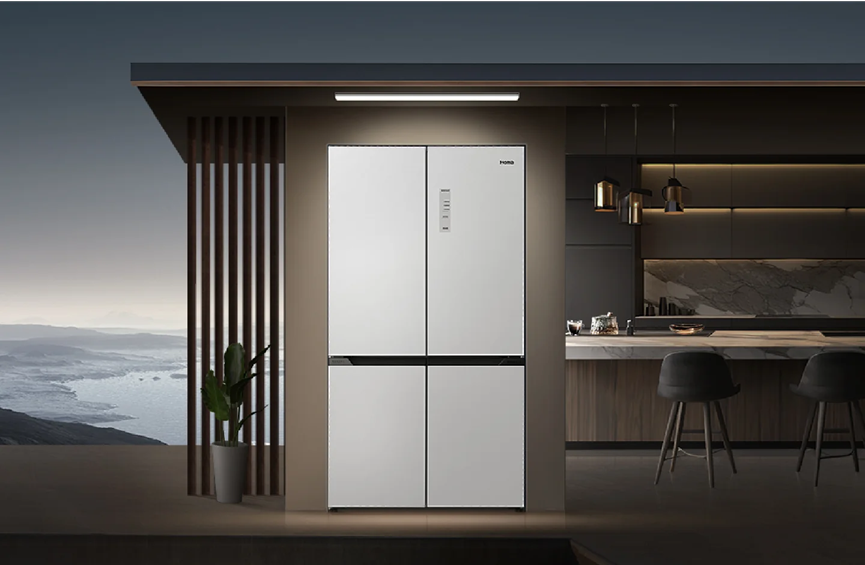
Within a “China refrigerator” assortment, side-by-side models offer another division, with fresh and frozen storage occupying separate sides. Multi-door designs divide access between three or four doors and can accommodate bulky items through their internal arrangement.
A narrow refrigerated section can make a wide container awkward to place even when the total capacity looks sufficient, while multiple doors change which part of the interior is exposed during access. Door count alone leaves the width and organisation of each storage area unresolved. A layout description establishes compartment relationships without identifying the cooling or defrost system.
Air Circulation and Frost Management
Identical door arrangements can contain different cooling and defrost systems. Air circulation concerns the movement of cooled air, while frost management addresses moisture that freezes on cold surfaces. The frost-management arrangement also influences the need for manual intervention. These functions belong to the refrigeration design, rather than to the number or position of the doors.
A comparison of “China refrigerator” products therefore needs the cooling description alongside the compartment layout. No-Frost, Frost-Free and Defrost identify different catalogue groups, but their detailed arrangements remain model-specific. Assisted circulation can be used within a hybrid system to reduce frost accumulation; the presence of moving air does not by itself describe every defrost function.
The relevant specifications also distinguish the refrigerated and frozen compartments. Establishing how frost is managed still leaves open whether the frozen storage is tall and divided or broad and horizontal.
Vertical and Horizontal Frozen Storage
A vertical cabinet organises access differently from a broad cavity beneath an opening lid. Upright freezers use height to arrange their storage, while chest freezers provide horizontal room for frozen goods. The choice involves the shape of the packages and the way food will be loaded and retrieved.
For bulky frozen supplies within a “China refrigerator” selection, internal space deserves examination beyond the overall capacity figure. A large package may occupy a substantial part of one storage area, affecting access to other items. Internal divisions also affect the usable width for packages. An upright arrangement and a chest cavity can therefore require different approaches to sorting and retrieval.
Convertible operation and an ice-making accessory are additional specifications, not inherent consequences of either cabinet shape. The available floor area must also accommodate the appliance and the movement needed to open it.
Fitting the Appliance into the Kitchen
The surrounding cabinetry, appliance body and opening door form one installation problem. The required opening space can extend beyond the dimensions of the closed appliance itself. An empty recess can appear large enough while leaving an unresolved question about ventilation or access. Freestanding placement, a flush alignment and an integrated installation therefore involve different fitting arrangements.
An installation plan for a “China refrigerator” unit includes the cabinet opening and the clearances stated for that particular product. Slot-in designs seek alignment with kitchen cabinets while preserving their required ventilation space. Built-in designs are intended for integration with cabinetry, with panel-ready options available on selected models.
A panel-ready option concerns the external finish rather than changing the appliance into a different cooling category. Equally, cabinet-depth construction does not establish compatibility with every recess. Once the fitting requirements are known, installation style can be considered alongside the chosen compartment arrangement and frost-management system.
Reading the Categories Together
Names that combine a layout with a cooling method show how the classification axes intersect. Homa Appliances lists twelve catalogue categories, including Combi-No-Frost, Top-Mount-Defrost and Built-in.
The first two combine compartment position with frost management; the third describes an installation approach. Slot-in adds a further installation distinction, aligning with surrounding cabinets while retaining ventilation clearance instead of being treated as an unrestricted built-in substitute.
A “China refrigerator” shortlist can follow those distinctions without treating every category as an unrelated appliance type. Selected Upright-No-Frost models offer convertible operation or a twist ice maker, so optional equipment still requires confirmation against the individual specification. The catalogue narrows the possible combinations, while actual food access and kitchen conditions determine which combinations remain relevant.
Taking out fresh food, storing a bulky frozen load and fitting the cabinet each contribute a separate requirement. Combining the answers produces a more precise description than choosing by a familiar door arrangement alone. Compartment location establishes access, the cooling specification explains frost management, and the installation category identifies the fitting approach. The final sequence is to select the relevant combination, then confirm its detailed model specification and installation requirements for the intended kitchen space.
